
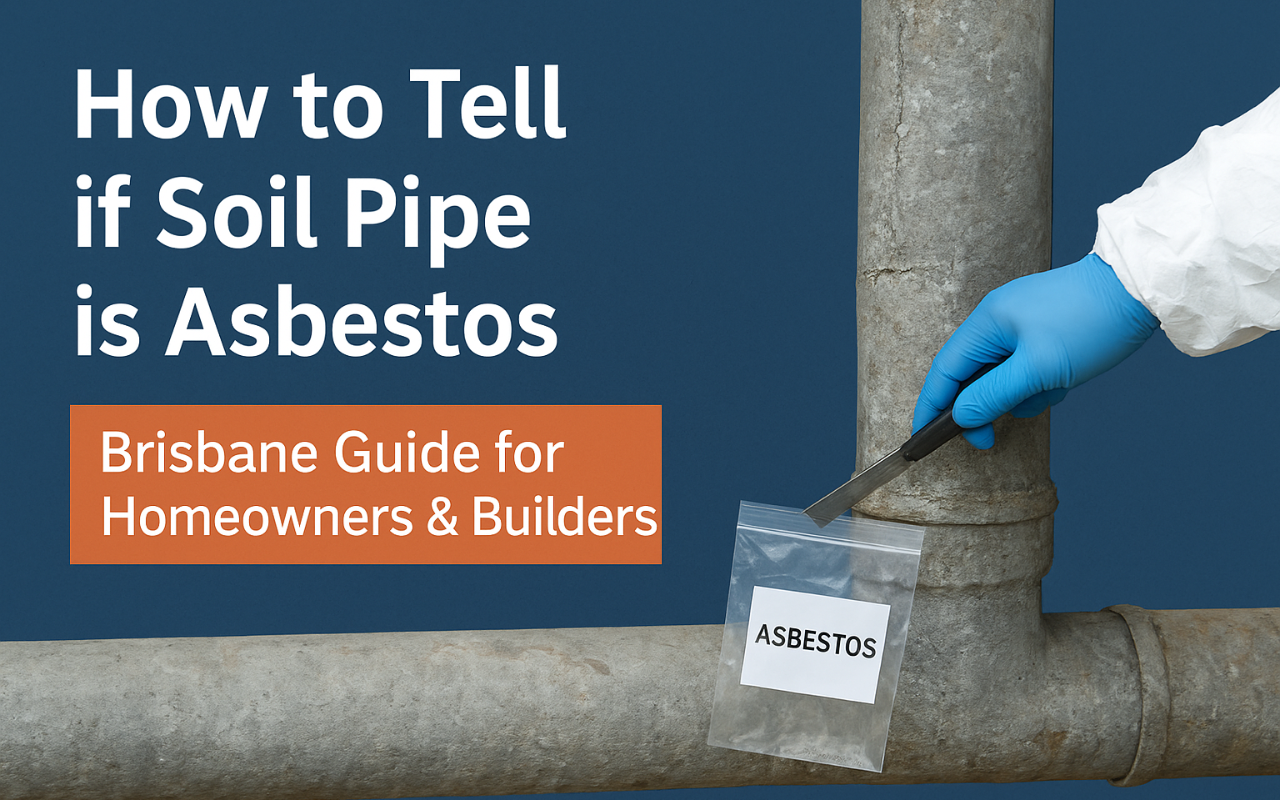
Asbestos was once considered a “wonder material,” widely used in construction across Australia. In Brisbane, thousands of homes built before 1990 still contain asbestos, not just in roofing and wall sheeting but also in less obvious places like soil and drainage pipes.
Unlike roof panels or insulation that are often visible, soil pipes are hidden in walls, under floors, or underground. This makes it harder for homeowners to know what they’re dealing with. Renovations, plumbing work, or even accidental damage can disturb these pipes and release hazardous fibres. For anyone wondering how to check for asbestos pipes, it’s essential to understand that only professional testing can provide a safe and accurate answer.
Health Impacts of Asbestos Fibres

Exposure to asbestos fibres is linked to:
- Asbestosis – an ongoing lung condition brought on by scarring.
- Mesothelioma – a rare, aggressive cancer.
- Lung cancer – significantly higher risk with asbestos exposure.
These diseases often take decades to develop, which is why health authorities stress the importance of prevention.
Get peace of mind—book an asbestos soil pipe inspection before starting any renovation work.
Understanding Asbestos Soil Pipes

Why Asbestos Was Used in Pipes
Asbestos cement pipes became popular from the 1940s through the 1980s. Builders chose them because they were:
- Strong and durable.
- Fire- and heat-resistant.
- Resistant to chemical corrosion.
- Relatively cheap to produce.
At the time, the health risks were not widely understood. Today, those same “durable” pipes are ageing and breaking down in many older Brisbane homes.
Common Types Found

- Asbestos Cement (AC) Pipes – Hard, grey, and heavy, often resembling ordinary concrete.
- Fibrous Cement Soil Pipes – Slightly lighter in weight, containing bonded asbestos fibres for strength.
While some pipes may carry markings such as “AC,” the only reliable way to confirm their composition is through asbestos sample testing.
If your property was built before 1990, book an asbestos sample test to confirm whether your soil pipes contain asbestos.
How Professionals Identify Asbestos Soil Pipes

Licensed asbestos consultants use a combination of methods to identify whether a soil pipe contains asbestos safely:
- Visual Inspections – Consultants examine the pipe’s condition, age, and markings.
- Safe Sampling – A small section of pipe is carefully collected.
- Laboratory Testing – Analysed in a NATA-accredited lab for accuracy.
- Comprehensive Reporting – Results and compliance requirements provided.
Homeowners often wonder if they can collect samples themselves, but in Queensland, only licensed experts can collect samples. Attempting to do so yourself risks contamination and breaches legal requirements.
For complete property safety, many clients also request broader asbestos audits and management plans to document all asbestos-containing materials in their homes.
Many homeowners ask if they can test for asbestos in pipes themselves. The short answer is no. DIY testing is dangerous, unreliable, and often illegal under Queensland regulations. Professional soil pipe asbestos identification is the only safe and compliant way to confirm whether your home’s drainage system contains asbestos.
Arrange a safe, accredited asbestos sample testing service with Envirohealth today.
When You Should Suspect Your Soil Pipe Is Asbestos
Here are the most common scenarios where asbestos soil pipes may be present:
- Pre-1990 Homes – Almost all homes built before this time contain asbestos in some form.
- Bathrooms and Kitchens – Pipes running from sinks, baths, and toilets were commonly made from AC.
- Stormwater and Sewer Lines – Underground drainage often used asbestos cement.
- Wear and Tear – Pipes that show cracks, chips, or deterioration are high-risk.
One of the most common concerns from homeowners is what happens if they disturb an asbestos soil pipe. If disturbed, even lightly, fibres may be released. Since fibres are invisible, only professional monitoring, such as indoor air quality testing, can confirm whether airborne asbestos exposure has occurred.
The Asbestos Soil Pipe Testing Process
When you book a soil pipe inspection in Brisbane, here’s what typically happens:
- Initial Consultation & Scheduling
You discuss your property and concerns with a licensed asbestos consultant.
- On-Site Assessment
The consultant inspects visible pipework and determines safe sampling points.
- Sample Collection
A small piece of pipe material is taken using strict safety protocols.
- Laboratory Analysis
The sample is tested using polarised light microscopy in a NATA-accredited facility.
- Results & Reporting
A detailed asbestos report is issued, explaining the findings and recommendations.
In Brisbane, asbestos soil pipe testing typically costs $150–$300 per sample. For property buyers, combining this service with a
pre-purchase asbestos inspection ensures no hidden asbestos risks derail your investment.
Get straightforward answers and affordable testing—book your asbestos soil pipe inspection today.
Factors Affecting Testing Time and Accuracy

Testing isn’t always instant. Several factors affect how quickly and accurately results can be delivered:
- Number of samples – More pipes = more analysis.
- Pipe condition – Fragile or broken pipes require delicate sampling.
- Accessibility – Underground or hidden pipes take longer to reach.
- Laboratory capacity – Accredited labs follow strict standards, which can influence turnaround time.
- Project urgency – Priority testing is available for tight renovation schedules.
Why DIY Soil Pipe Checks Are Unsafe
Some homeowners consider checking pipes themselves or ordering DIY kits. This is never safe.
- Fibres are invisible: You cannot see or smell asbestos when fibres are released.
- Legal restrictions: In Queensland, only licensed professionals can collect samples.
- Unreliable kits: DIY kits often provide false negatives or positives.
- Health risks: Even a minor disturbance can contaminate your home with asbestos fibres.
For example, a Brisbane homeowner once attempted to cut into a soil pipe during a bathroom renovation, thinking it was harmless cement. The job had to be halted immediately, with professional asbestos remediation costing far more than initial testing would have.
How Envirohealth Protects Brisbane Homes
Envirohealth offers Brisbane homeowners complete peace of mind with:
- Licensed local consultants familiar with Queensland laws.
- NATA-accredited lab testing for guaranteed accuracy.
- Fast scheduling and communication so projects stay on track.
- Detailed, easy-to-understand reports for builders, buyers, and homeowners.
Common Mistakes Homeowners Make
- Thinking pipes are safe because they “look fine.”
- Attempting DIY testing or removal.
- Using cheap, non-accredited testing services.
- Continuing renovations without clearance.
These mistakes not only put your health at risk but can also lead to heavy fines under Queensland law.
Why Professional Identification Matters
Professional testing of soil pipes is about more than just peace of mind. It ensures:
- Health and safety – Protects families, tradespeople, and future buyers.
- Regulatory compliance – Meets Queensland asbestos laws.
- Project efficiency – Prevents costly delays during renovations.
- Property value protection – Ensures buyers are confident in your home.
Final Thoughts
Asbestos may be present in your soil pipes if your Brisbane home was constructed before to the 1990s. 9This isn’t something you can check on your own—professional inspection and testing are the only safe and legal options.
Protect your family, your property value, and your renovation plans by acting early.